The City That Boxes the World
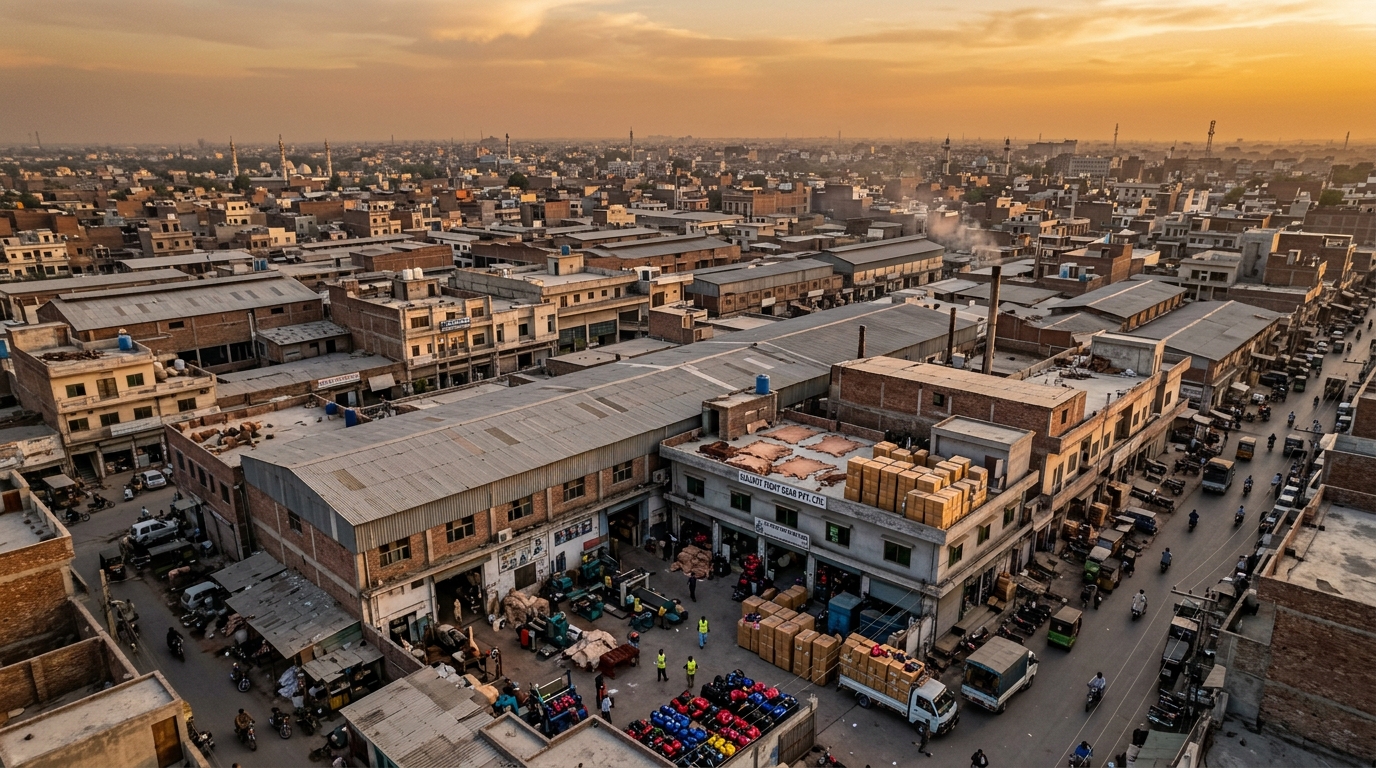
Most people who have ever laced up a pair of boxing gloves have held a piece of Sialkot. This city in Punjab, Pakistan — population roughly 700,000 — produces an estimated 70–80% of the world's hand-made boxing gloves, a significant share of global martial arts uniforms, and the majority of export-quality protective gear sold under every major fight brand. Understanding why Sialkot became the world's fight gear capital, and what that means for brands working with manufacturers here, provides essential context for anyone serious about the business of combat sports equipment.
150 Years of Unbroken Craftsmanship Heritage
Sialkot's sports goods manufacturing legacy stretches back to the British colonial period. The city had already established itself as a center for surgical instrument manufacturing when British officers, stationed nearby, began commissioning local craftsmen to repair sporting equipment in the late 19th century. The craftsmen adapted quickly — and their skills proved transferable to any leather-based manufacturing requiring precision hand work.
By the early 20th century, Sialkot was producing football and cricket equipment for export. Fight gear — boxing gloves, protective equipment, wrestling gear — followed as international demand for combat sports equipment expanded through the mid-century. The knowledge was passed from master craftsman to apprentice, generation after generation, creating a deep accumulated skill base that simply doesn't exist at comparable scale anywhere else on earth.
Today, over 3,000 registered sports goods manufacturers operate in Sialkot and its surrounding districts. They serve clients ranging from a small martial arts academy in rural France to the official equipment suppliers of professional boxing organizations. The scale and diversity of the manufacturing ecosystem is genuinely remarkable.
The Industrial Cluster Advantage
Sialkot's dominance isn't just about individual factories — it's about the industrial cluster effect. An industrial cluster occurs when a concentration of related businesses in one geographic area creates advantages that no single business could achieve alone.
In Sialkot, this means:
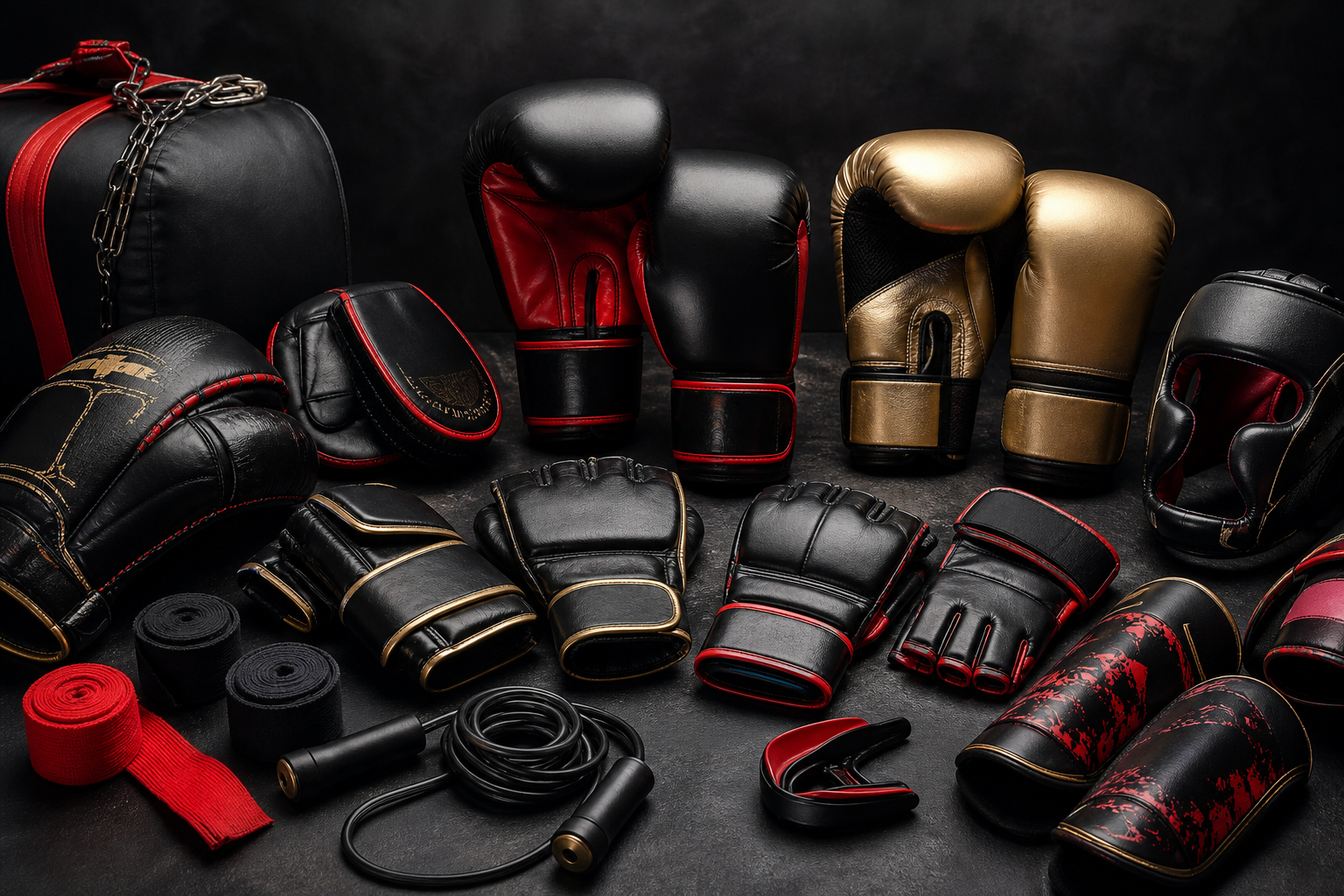
- Specialized material suppliers: Tanneries producing fight gear-grade cowhide, synthetic leather manufacturers calibrated to boxing glove requirements, and foam producers who understand exactly what density profiles work for combat sports equipment — all within 50 kilometers of the factories they supply. This proximity reduces lead times and allows rapid material sampling and substitution.
- Specialist component suppliers: Hardware manufacturers producing boxing glove closure mechanisms, zipper specialists, webbing producers, elastic manufacturers, and embroidery thread suppliers all cluster in and around Sialkot. Components that would need to be imported from multiple countries elsewhere in the world can be sourced locally, often within hours.
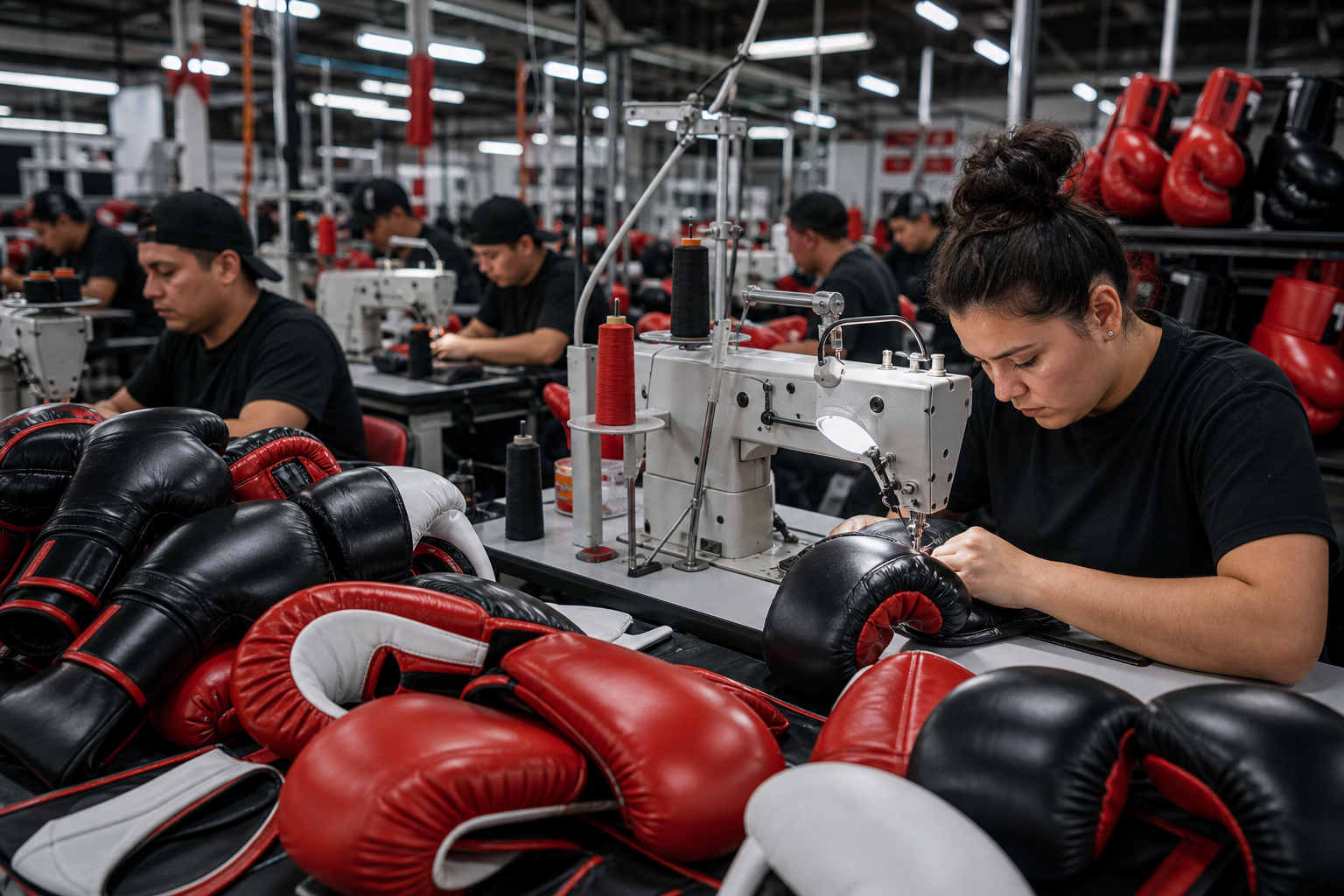
- Shared skill labor market: The concentration of fight gear factories creates a deep pool of trained workers with specific skills — leather cutters, hand-stitchers, pattern makers, and quality controllers who have spent their careers in fight gear manufacturing. These skills don't exist in general labor markets elsewhere at anything close to comparable depth or scale.
- Competitive specialization: With thousands of manufacturers competing in the same market, there's intense pressure on quality, efficiency, and innovation. Factory owners know their competitors are constantly improving, and they must do the same to retain business. This competitive pressure is a significant driver of quality improvement across the entire industry.
Export Infrastructure and Logistics
Sialkot has invested heavily in the infrastructure needed to serve global export markets efficiently. The city operates its own international cargo airport — Sialkot International Airport — which handles significant volumes of fight gear exports by air freight to Europe, North America, and the Middle East. For sea freight, goods move via road to Karachi or Port Qasim, with multiple freight forwarding companies offering consolidated container services specifically optimized for sports goods shipments.
Sialkot's export processing zones offer additional advantages for manufacturers working on large orders: streamlined customs procedures, bonded warehousing, and dedicated trade facilitation services. The Pakistan government has made fight gear manufacturing a priority export sector, providing various incentive programs that help keep pricing competitive for international buyers.
What This Means for Your Brand
Working with a Sialkot manufacturer isn't just a sourcing decision — it's access to the deepest pool of fight gear manufacturing expertise on the planet. A well-established Sialkot factory brings:
- Pattern making expertise: Factories with decades of experience have accumulated pattern libraries for hundreds of product variations. A new product brief often draws on existing patterns that can be modified rather than built from scratch, dramatically shortening sampling timelines.
- Material knowledge: Local factories have long-standing relationships with material suppliers and understand exactly which leather grades, foam densities, and synthetic materials are appropriate for specific product categories. Their material recommendations typically prove more accurate than a new brand's initial specification assumptions.
- Competitive pricing: The cluster effect creates genuine cost advantages. Input material costs are lower due to local sourcing, labor costs remain competitive, and factory efficiency is high due to decades of process refinement. These advantages translate to prices that factories in Europe, the US, or other Asian manufacturing centers simply cannot match for comparable quality.
- Scalability: Sialkot factories range from small artisan workshops producing 500 units per month to large industrial operations producing 50,000+ units monthly. Whatever your volume, there's a factory scaled appropriately for your business.
Choosing the Right Sialkot Factory for Your Brand
Not all Sialkot factories are equal. The range of quality, reliability, and capability is wide, and selecting the wrong partner can result in significant losses of time and money. When evaluating Sialkot manufacturers, prioritize:
- Verifiable export history: Ask for a customer reference list and actually contact references. A factory with a 10-year history of successful exports to Europe or North America has demonstrated the reliability and communication skills needed for a long-term partnership.
- In-house pattern making and sampling: Factories that handle pattern development in-house have dramatically faster iteration cycles than those that outsource this work. Internal sampling capability means sample revisions happen in days rather than weeks.
- Transparent quality control processes: Ask prospective factories to describe their QC process in detail. Professional manufacturers will provide clear, specific answers about their inline inspection, AQL sampling procedures, and final inspection process. Vague answers suggest underdeveloped QC systems.
- Clear communication and business practices: Responsiveness, clarity of quotations, and willingness to provide detailed product specifications are strong indicators of the factory's professionalism. The way a factory communicates before an order tells you a great deal about how they'll communicate during production.
Deer Fight Gear is a Sialkot-based OEM fight gear manufacturer with over a decade of experience supplying brands across Europe, North America, the Middle East, and Australia. We manufacture boxing gloves, martial arts uniforms, MMA apparel, protective equipment, and accessories with full private label customization. Visit our gallery to see our product range, or contact us to discuss your project requirements. We'd welcome the opportunity to demonstrate why Sialkot — and Deer Fight Gear specifically — should be your manufacturing partner.